
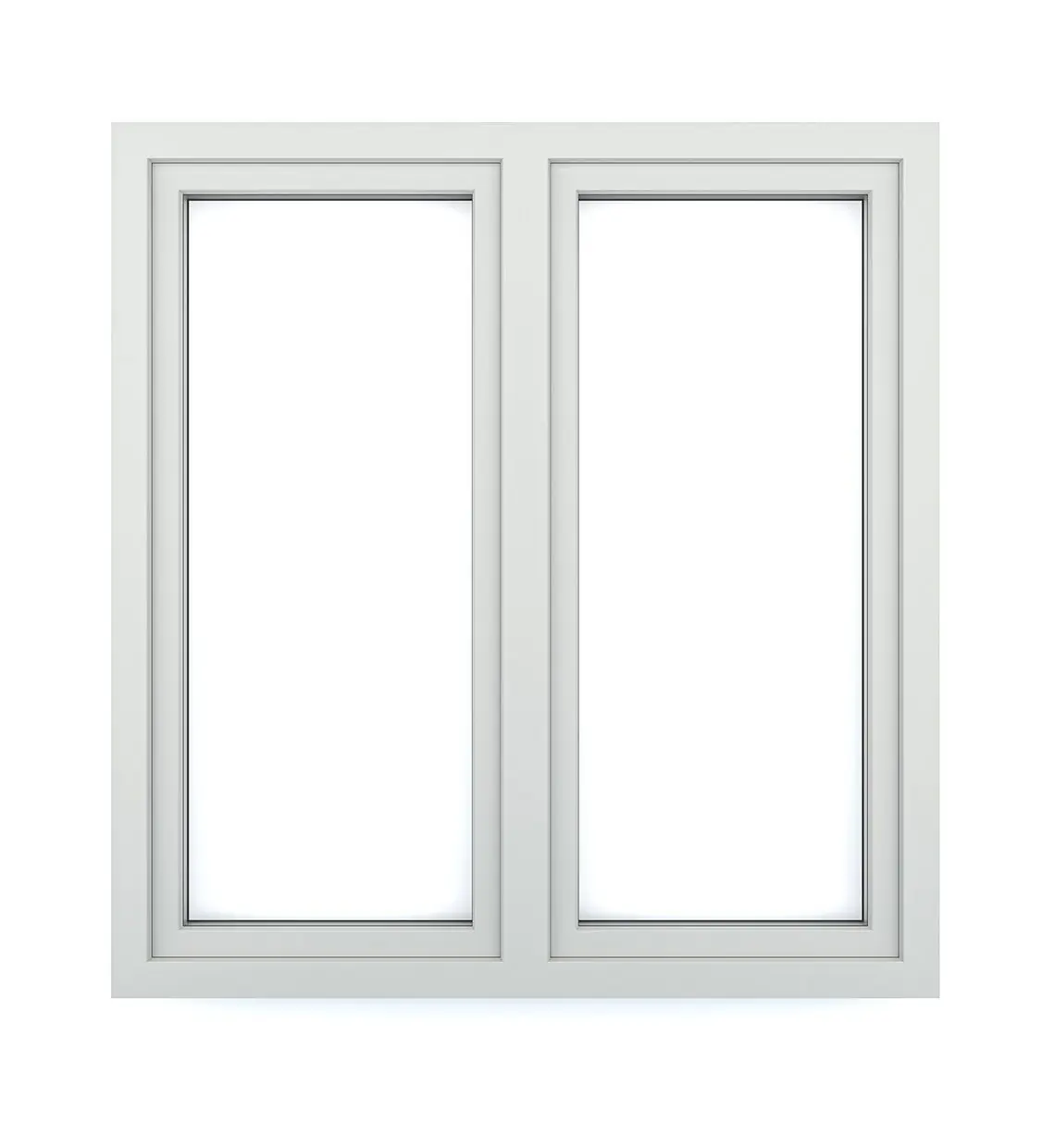
Five chambers in the profile keep the warmth in and the cold out. No cold bridge, no condensation on the frame.
HR++ as standard (U 1.1). Triple glazing (U 0.7) is also possible, often worthwhile in an energy-efficient renovation and good for ISDE subsidy.
Multi-point locking with mushroom cams, SKG**-certified. Securely locked in tilt-and-turn position too.
Over 50 colours and woodgrain foils. White inside and anthracite outside? No problem.
Never paint again. Wiping down once a year with water and mild soap is enough.
A deeper profile with six chambers: a lower U-value and more room for thick glazing. For those who want maximum insulation.
Three panes (U 0.7 or lower). Noticeably quieter and warmer, ideal near busy roads or in new builds.
Large windows stay perfectly straight thanks to the heavier steel core. Even with wide window walls.
The same 50+ colours and woodgrain foils as the Ideal 4000 profile.
Thanks to the profile depth and thicker glazing, this window damps street noise noticeably better.
What goes into a Pranger window?
Click the plus signs to discover what to look for in a uPVC window. We work with aluplast profiles: German, solid, and in two depths.
Our most popular profile: 70 mm deep, five chambers, suitable for HR++ glazing. Sleek and timeless, it suits almost any home. From 1930s to new build.
Configure your uPVC windowsThe thicker profile: 85 mm deep, six chambers, ready for triple glazing as standard. The choice if you want maximum insulation or need to meet new-build requirements.
Configure your uPVC windowsEverything you want to know about uPVC windows.
Honest and complete: who it suits, what it costs, how it works for insulation, security and installation, and what maintenance is left afterwards.
Who is uPVC the right choice for?
uPVC windows are the right choice if you want to insulate, be rid of painting and are after a sleek look that lasts decades. For 1960s to 1990s homes with timber windows due for replacement, it's almost always the most affordable and carefree option.
Read more
There are also situations where we'll honestly advise something else. With a listed building or in a conservation area, planning rules often set requirements for material and profile. And if you're set on the fine detailing of timber with glazing bars and bead profiles, uPVC woodgrain gets you a long way. But we'll show you a sample first before you decide.
What does a uPVC window cost?
The price depends on the size, the number of opening sections, the glazing and the colour. A fixed window is the most affordable; a tilt-and-turn window with triple glazing in a woodgrain foil sits at the top end. What it comes to in your case depends so much on your façade that a figure without measuring says very little.
- Size and number of opening sections: a fixed window costs less than a tilt-and-turn window
- Glazing: HR++ or triple, optionally solar-control or sound-reducing
- Colour and profile: standard white costs less than woodgrain or a RAL colour on both sides
- Connections: window sills, trickle vents, insect screens and making good the brickwork
Read more
Our quote lists materials and labour separately. No small print: what it says is what you pay. If something does come up during measuring or installation, we call you first.
We only name a price after measuring, and that price is then fixed. The measuring visit is free and without obligation.
Insulation, glazing and subsidy
A window insulates through two things: the profile and the glazing. Our profiles have five (Ideal 4000) or six (Ideal 7000) air chambers and a steel core; that's why you no longer feel the cold standing by the window. The glazing does the rest: HR++ (U-value 1.1) is the standard and more than enough for most homes. You choose triple glazing (U-value 0.7 or lower) if you're insulating the rest of the house well too, live on a busy road or want a high energy label.
- HR++ glazing: U 1.1, standard, always eligible for subsidy
- Triple glazing: U 0.7, quieter, warmer, higher subsidy
- Trickle vents or tilt position for fresh air
- No cold bridge and no condensation on the frame
Read more
New windows with HR++ or triple glazing save on average 10 to 20 per cent on your gas consumption, depending on what's there now. Ventilation is handled with trickle vents in the frame or a tilt-and-turn setting. We discuss that when measuring.
Tip: with HR++ or triple glazing you usually qualify for ISDE subsidy. Work it out on our subsidy page. We prepare the application.
Security and burglar resistance
As standard we supply all opening sections with multi-point locking and mushroom cams: the sash hooks into the frame at several points, so levering it open is pointless. The hardware is SKG**-certified, which most insurers require for the lowest premium.
- Multi-point locking with mushroom cams: standard
- SKG** hardware: standard
- Lockable handle, RC2 and laminated glass: optional
- Stays locked in tilt position
Read more
Want more? Lockable handles, RC2 hardware and laminated glass on the inside are all possible. We often recommend this for the ground floor and the rear of the house.
Colours, woodgrain and finish
White isn't the only option. We have over 50 colours and woodgrain foils, from anthracite and black to golden oak and cream. The foil is fused to the profile and doesn't discolour. Inside and outside may differ: white inside for a calm interior, outside in the colour of your façade.
- 50+ colours and woodgrains, chosen separately for inside and outside
- Flat modern profile or classic with a bead
- Glazing bars, vents and window sills made to measure
- We bring colour samples to the measuring visit
Read more
You choose the styling too: a sleek flat profile for modern homes, or a profile with bead and rebate that comes close to the old timber window. We coordinate glazing bars, trickle vents and window sills to match.
How does installation work?
Once you approve, our own surveyor comes to record the dimensions and the joints in the brickwork. The windows are then made to size; allow a few weeks' production time. After that we schedule installation on a date that suits you.
- Measured by the same fitter who installs
- One window out and in at a time: your home is never left open
- 2 to 5 working days for an average home
- Finishing inside and out, removal of old windows included
Read more
On the day itself we take out the old window and fit the new one unit by unit, so your home is never left open overnight. We do an average home in 2 to 5 working days. We work with minimal dust, seal inside and out and take the old windows and waste away with us. At handover we go through everything with you and explain how it all works.
Maintenance and warranty
uPVC windows never need painting. Wiping them down once or twice a year with water and mild soap is enough; the seals and hardware get an occasional drop of acid-free oil. That's all.
- Never paint again
- 10-year warranty on product and installation
- One point of contact, even years later
- Service life: 40 years or more
Read more
You get a 10-year warranty on the window and on our installation. And because we do everything ourselves, there's only one number to call with a question or complaint.
Configure your uPVC windows.
Choose colour, glazing and profile. You see your configuration take shape instantly and can request a quote for it.
Frequently asked questions
The questions we get most often about uPVC windows. Yours not here? Just give us a call.
Ask your question directly01How long does it take from quote to installation?
02HR++ or triple glazing, which should I choose?
03Can the inside colour differ from the outside?
04What happens to my old windows?
05What warranty do I get?
Curious what your windows would cost?
Request a no-obligation quote or book a free measuring visit. We'll take all the measurements and advise on the spot.